Thinking of starting a watercolor hobby but don’t know where to start? I got your back! I understand the feeling of wanting to dive into painting, but feeling intimidated by all of the different options online. Fortunately, you don’t have to spend a bunch of money to start doing watercolors. Here’s an easy guide to watercolor supplies for beginners, broken down into four steps.
Disclosure: I earn a small percentage of commission from the affiliate links in this article at no extra charge to you. Please consider purchasing from these links to support my blog!
1. Choosing the right paper
Many watercolorists agree that if you were to choose between high-quality watercolor paints and high-quality watercolor paper, choose the latter. This is because the quality of the paper hugely affects how the paints blend and how forgiving it is as you layer colors. Cheap paper will buckle and tear after just a few layers of watercolor paints – which is terrible because watercolor painting is all about layering and layering paints to create depth. Don’t skimp out on good quality watercolor paper unless you want your beginner experience to be miserable.
There are three things to keep in mind:
1) GSM, which stands for grams per square meter, shows the weight of the paper. 140 gsm is great for lighter sketches while I recommend 300 gsm for heavier finished artwork with a lot more layering.
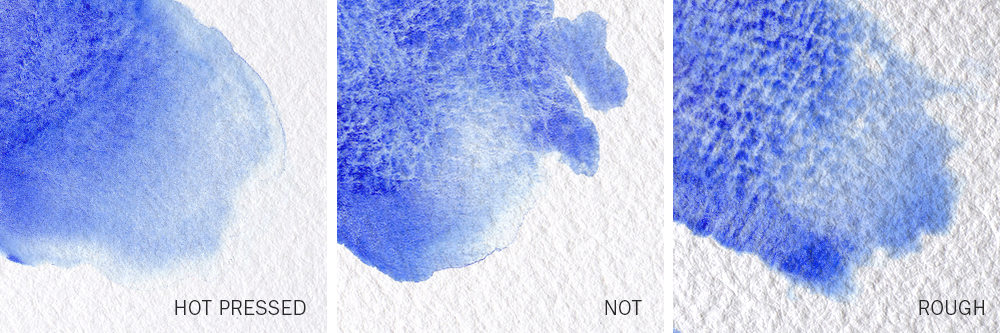
2) Texture of watercolor paper is divided into three categories. Hot-press paper is the least textured and the most smooth. Cold-press paper is in-between, slightly textured but not too rough. Rough paper is the most textured. Whether you choose hot-press paper or rough paper is totally up to personal preference. Try out different textures and see what you like the best!
3) Percentage of cotton in the paper changes how easy the paper is to work with. 100% cotton paper is the most durable, most absorbent, and most forgiving. That said, 100% cotton paper is the most expensive.
With that in mind, here are some affordable recommendations I have for good watercolor paper:
Arches Cold-Press Watercolor paper, 140 gsm (Arches is widely considered the best brand for watercolor paper)
Fabriano Studio Watercolor Pad – Cold-Press, 25% Cotton
Strathmore 400 Watercolor paper
2. What Watercolor paints to buy?
Generally speaking, you only really need 6 colors in your watercolor palette, one cool and one warm version of each primary color. The image below can you give you an idea of what this means (from Liz Steele’s art blog).
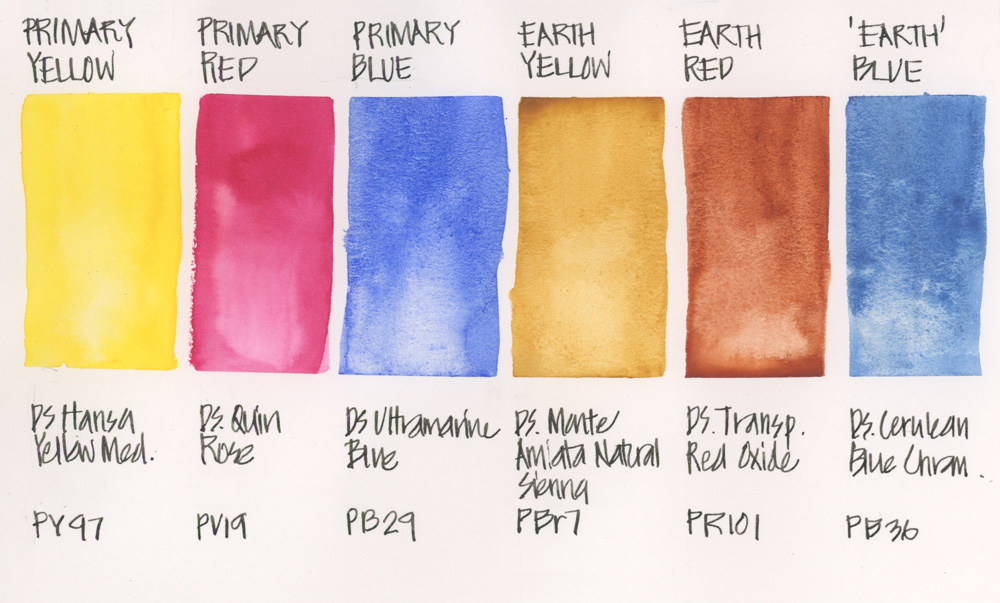
A ready-made watercolor tube set is the Daniel Smith 6-color Introductory set. This 6-color set follows the above formula. It’s pretty pricey coming at $5.50/tube ($33 total), but Daniel Smith is probably the best brand of watercolors you can get. They are professional grade and has one of the most lightfast, meaning there’s minimal fading when exposed to light. You will need a separate mixing dish because these include only tubes of paint.
On the opposite side of the spectrum are Prang 8-color Watercolors, coming in at $0.47/color (this whole set is currently just under $4). This set allows you to enjoy vibrate colors with a decent blending experience, at a beginner price. I highly recommend this for anyone who wants to dip their toes in watercolor before investing in higher-quality material.
As a middle of the road intermediate option, I would recommend the Winsor & Newton Cotman 12-pan Set w/brush ($20). This was my introductory set when I started getting into watercolors. The colors are good quality and arranged intuitively. The set is compact and portable while also having three separate mixing areas on the lid. Personally, I think the included brush is way to small to be useful, but it’s a nice touch.
3. Watercolor brushes (Hint: You only need three)
As a beginner, three good-quality brushes can carry you a long way. I would recommend two round-tip brushes at sizes 6 and 10, and one large flat wash brush for large washes. Round-tip brushes allow you to have a great control over line width. Even with a size 6 brush, which is like a medium-small brush, you can get very thin lines depending on the quality of the brush.
Brushes can be made of natural animal hairs, which holds a lot more water but is also very expensive. Other brushes are made of synthetic fiber and have varying quality. All of the brushes I use are synthetic, so you can definitely get really good-quality synthetic brushes! But just like any other art supply, the better it is, the more expensive.
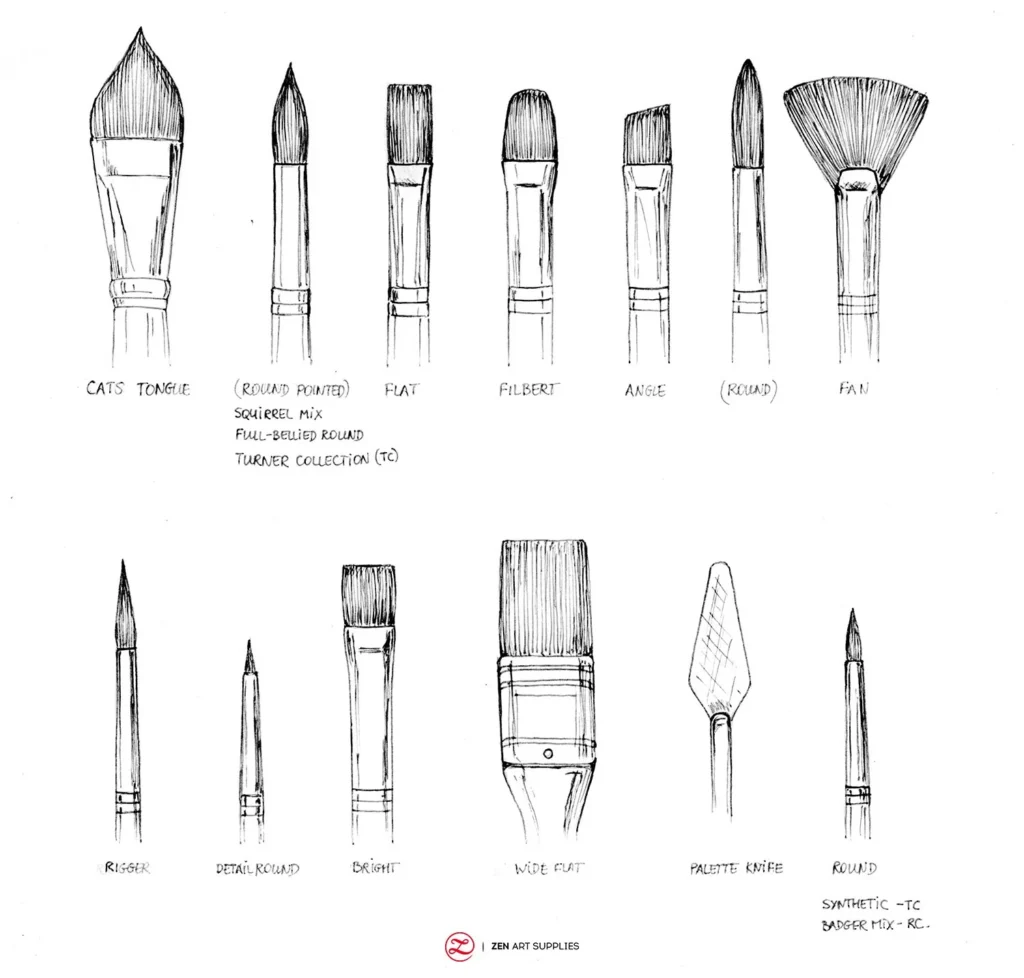
As you expand your watercolor skills you’ll want to try out different types of brushes, like a rigger brush for the tiny details, or a fan brush for fun textures. I linked below some brushes from the “Princeton” brand. They’ve been around for a while and have generally good brushes for a reasonable price.
Princeton Aqua Elite Mottler 1-1.5 inch
4. Miscellaneous
Lastly, here a few extra things that aren’t necessary “art supplies” but without them, your life as a watercolor artist will suffer.
1) You’ll need some paper towels (just any brand from any store) to wipe off excess water/paint from your brush. Many artists also use paper towels to lift paint. Since watercolors are transparent and can only get darker as you paint, this is very valuable.
2) This one is obvious, you’ll need a jar or cup of clean water to clean your brush and mix paints. Some artists use two jars – one for cleaning the brush, and one to add clean water to paints.
3) Painters tape or masking tape. This is to tape down your borders to prevent buckling as you apply water and paint. It’s also very satisfying to peel off the tape when your done and reveal a crisp border.
I hope this article was helpful for you! If so, consider subscribing to my email list to get updates whenever I post helpful articles and reviews about art. Good luck to everyone getting started with watercolors!